Spanish phrases for your trip to Mexico
The Spanish phrases you need for a trip to Mexico, sorted by the moments you’ll actually be in: greeting people, taking a taxi or bus, ordering food, shopping at a market, paying, checking in and asking for help. Each one comes with what people are likely to say back.
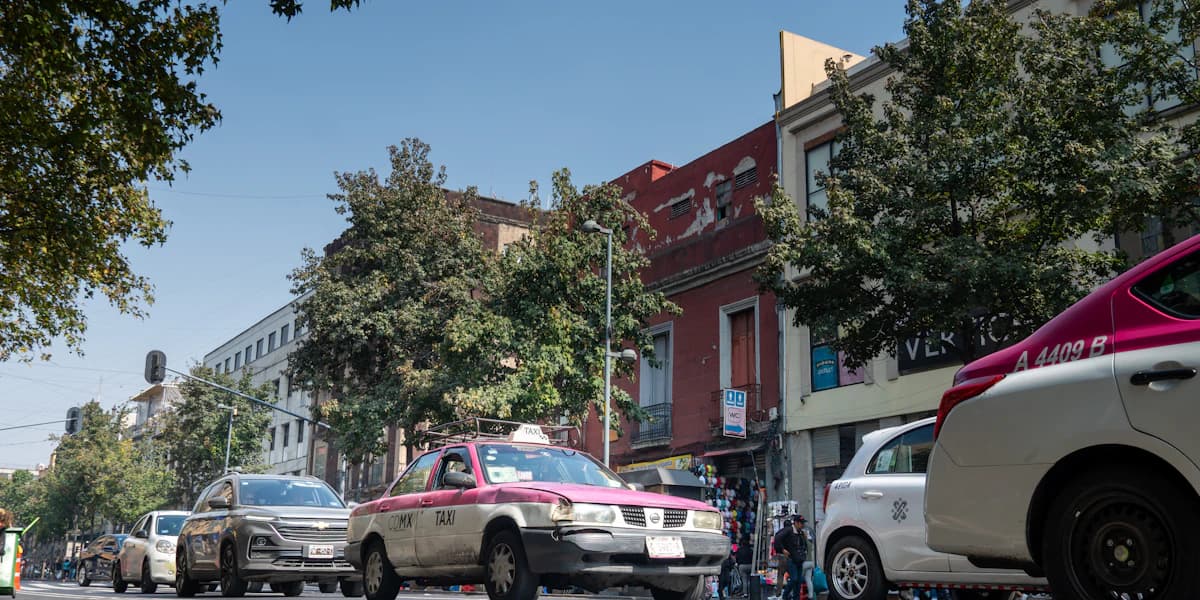
En el taxi
Mexico City · with Don Beto
Start with these 12 phrases
If you only learn a handful before you go, make it these. They get you through greetings, prices, food and finding your way.
Hola
Hello
Buenos días
Good morning
Buenas tardes
Good afternoon
Por favor
Please
Gracias
Thank you
Disculpe
Excuse me
¿Habla inglés?
Do you speak English?
No entiendo
I don’t understand
¿Cuánto cuesta?
How much is it?
¿Dónde está el baño?
Where is the bathroom?
La cuenta, por favor
The check, please
Me da…, por favor
Could I have…, please
Greetings and being polite
A greeting comes before almost everything. Say buenos días or buenas tardes before you ask a question, order or buy something. It’s the polite way to start, and it makes everything after it easier.
Buenos días
Good morning
Buenas tardes
Good afternoon
Buenas noches
Good evening, or good night
Mucho gusto
Nice to meet you
Disculpe
Excuse me, to get someone’s attention
Con permiso
Excuse me, to get past someone
¿Puede hablar más despacio, por favor?
Could you speak more slowly, please?
¿Cómo se dice … en español?
How do you say … in Spanish?
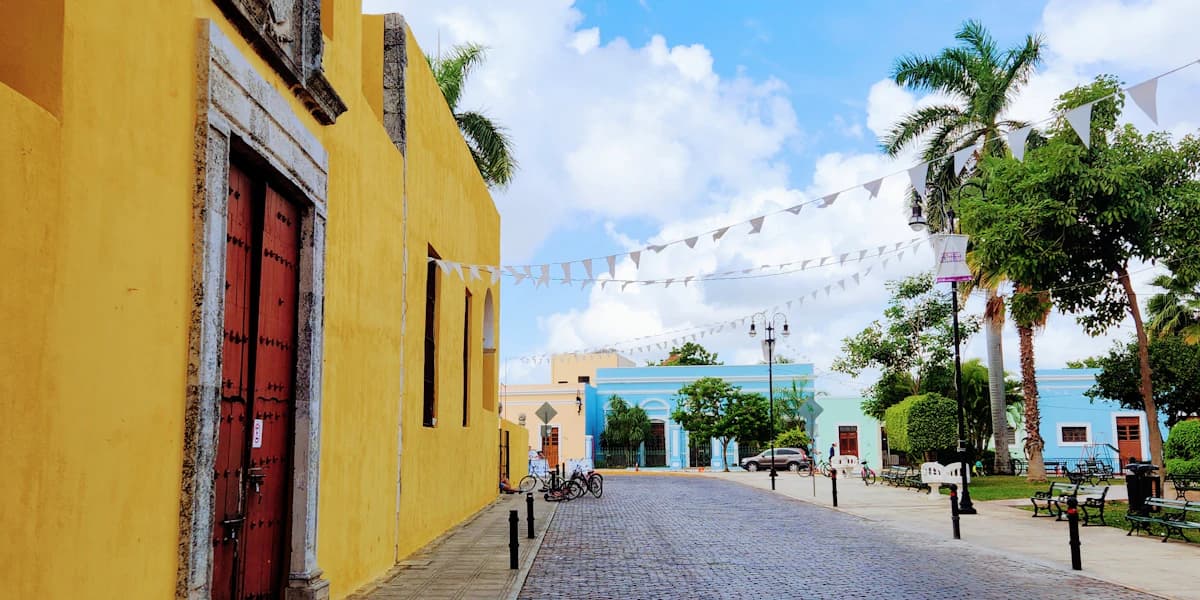
En la parada del camión
Mérida · with Don Isauro
What you might hear back
“¿Cómo está?”
How are you?
“Igualmente”
Likewise
“Con mucho gusto”
My pleasure, a warm reply to gracias
Use usted forms like ¿cómo está? and disculpe with strangers, drivers and shopkeepers. It’s the polite, safe choice.
Taxis, buses and getting around
Have your destination ready as a full phrase, and check the price or the route before you set off. In Mexico, a city bus is usually called a camión. In big cities many people get around with Uber or DiDi, and the driver will usually check your name first.
¿Me puede llevar a …?
Can you take me to …?
Al centro, por favor
To the center of town, please
¿Cuánto cuesta ir a …?
How much is it to go to …?
Aquí está bien, gracias
Here is fine, thanks
¿Este camión va al centro?
Does this bus go to the center?
¿Dónde está la parada?
Where is the stop?
¿A qué hora sale?
What time does it leave?
Un boleto a …, por favor
A ticket to …, please
Estoy en la entrada principal
I’m at the main entrance
¿Me puede esperar aquí?
Can you wait for me here?
“Sí, este camión va al centro. Pasa cada quince minutos.”
What you might hear back
“¿A dónde vamos?”
Where are we going?
“¿A nombre de quién?”
Under what name? A ride app driver checking it’s you
“Pasa cada quince minutos.”
It comes every fifteen minutes.
“Es la siguiente.”
It’s the next one.
Camión is masculine, so it’s este camión, not esta camión. It’s one of the first corrections in Poco a poco’s bus stop scene.
Ordering food
At a taquería or restaurant, say how many and which kind, then por favor. Me da (could I have) is a friendly way to order.
“¿Qué le sirvo? Tenemos tacos de pastor, de suadero y de chorizo.”
Una mesa para dos, por favor
A table for two, please
¿Qué me recomienda?
What do you recommend?
Me da tres tacos de pastor, por favor
Could I have three al pastor tacos, please?
¿Pica?
Is it spicy?
Sin cebolla, por favor
No onion, please
Para llevar
To go
La cuenta, por favor
The check, please
¿Aceptan tarjeta?
Do you take cards?
What you might hear back
“¿Qué le sirvo?”
What can I get you?
“¿Para aquí o para llevar?”
For here or to go?
“¿Algo de tomar?”
Anything to drink?
“¿Algo más?”
Anything else?
Stuck on the menu? Ask ¿qué me recomienda? and let them choose. The answer is a free lesson in food words.
Shopping and markets
Prices are the first thing you’ll ask about. With more than one thing, the verb changes too: cuesta for one, cuestan for several.
¿Cuánto cuesta?
How much is it?
¿Cuánto cuestan los mangos?
How much are the mangoes?
Me da un kilo, por favor
Could I have a kilo, please?
Solo estoy viendo, gracias
I’m just looking, thanks
¿Tiene otro más grande?
Do you have a bigger one?
Me lo llevo
I’ll take it
¿Tiene cambio?
Do you have change?
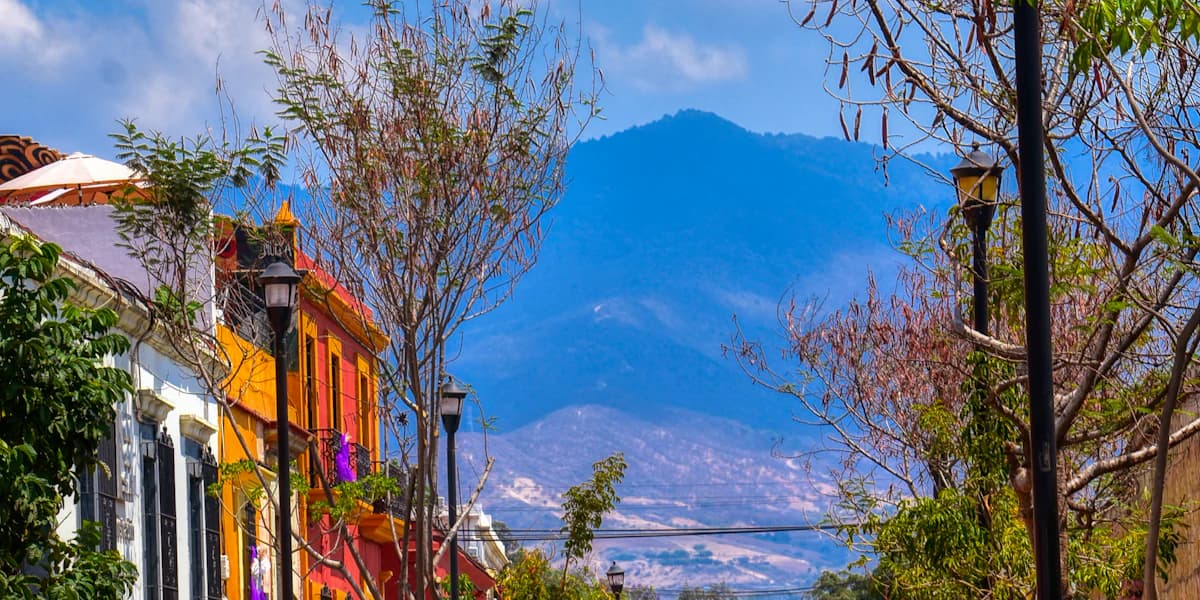
En el mercado
Oaxaca
Correction
¿Cuánto cuestan los mangos?
With more than one thing, the verb changes too.
Polite requests
Me da un kilo, por favor.
Me da sounds friendlier than quiero at a market stall.
What you might hear back
“¡Pásele!”
Come on in, take a look!
“¿Qué va a llevar?”
What would you like?
“Son cincuenta pesos.”
That’s fifty pesos.
Me da sounds friendlier than quiero at a market stall.
Numbers, money and paying
You’ll hear a price in almost every exchange, so the numbers are worth learning first. Cash is still common at markets, taquerías and taxis, so carry some small bills and coins.
1 uno
2 dos
3 tres
4 cuatro
5 cinco
6 seis
7 siete
8 ocho
9 nueve
10 diez
20 veinte
50 cincuenta
100 cien
200 doscientos
500 quinientos
1,000 mil
¿Cuánto es?
How much is it, all together?
¿Me cobra, por favor?
Can I pay, please?
¿Aceptan tarjeta?
Do you take cards?
Voy a pagar en efectivo
I’ll pay in cash
¿Dónde hay un cajero?
Where is there an ATM?
¿Tiene cambio de quinientos?
Do you have change for a 500?
¿Está incluida la propina?
Is the tip included?
¿Me da el ticket, por favor?
Could I have the receipt, please?
What you might hear back
“Son doscientos cincuenta.”
That’s two hundred fifty.
“¿Efectivo o tarjeta?”
Cash or card?
“No tengo cambio.”
I don’t have change.
“No pasa la tarjeta.”
Your card isn’t going through.
Pesos use the same $ sign as dollars, so $250 on a menu means 250 pesos. In Mexico a receipt is usually called el ticket.
At your hotel
In Mexico you’ll usually hear reservación for a booking and cuarto or habitación for a room. Most hotel questions start with ¿hay…? (is there…?) or ¿puedo…? (can I…?).
Tengo una reservación a nombre de …
I have a reservation under the name …
¿A qué hora es la salida?
What time is checkout?
¿Cuál es la contraseña del wifi?
What’s the wifi password?
¿Hay desayuno?
Is breakfast included?
No hay agua caliente
There’s no hot water
¿Puedo dejar mi maleta aquí?
Can I leave my suitcase here?
¿Me puede pedir un taxi?
Could you call me a taxi?

What you might hear back
“¿Me permite una identificación?”
May I see some ID?
“Su cuarto está en el segundo piso.”
Your room is on the second floor.
“El desayuno es de siete a diez.”
Breakfast is from seven to ten.
Directions and getting help
Ask short questions, then listen for a few key words in the answer: derecha, izquierda, derecho and cuadras.
¿Dónde está …?
Where is …?
¿Cómo llego a …?
How do I get to …?
¿Está lejos?
Is it far?
Estoy perdido / perdida
I’m lost
¿Dónde hay una farmacia?
Where is there a pharmacy?
Necesito ayuda
I need help
Necesito un médico
I need a doctor
Llame a una ambulancia, por favor
Please call an ambulance
What you might hear back
“Todo derecho”
Straight ahead
“A la derecha / a la izquierda”
To the right / to the left
“A dos cuadras”
Two blocks away
“En la esquina”
On the corner
If the answer comes too fast, ask ¿me lo puede repetir más despacio? (could you repeat that more slowly?). It’s always fine to ask.
Mexican words you’ll hear everywhere
Some of the most common words in Mexico aren’t in a phrasebook from Spain. You’ll hear these from your first day, and a few are worth using yourself.
How is Mexican Spanish different from Spain’s? See our guide to Mexican Spanish.¿Mande?
Sorry? The polite way to ask someone to repeat
Sale
OK, sounds good
¡Qué padre!
How cool!
¡Provecho!
Enjoy your meal, said to people eating
What you might hear back
“Ahorita”
Right now, or in a little while. The context tells you which
“No hay”
There isn’t any, or we’re out
“¿Qué onda?”
What’s up? Casual, between friends
“¿Bueno?”
Hello?, when answering the phone
¿Qué? can sound abrupt in Mexico. When you didn’t catch something, say ¿mande? instead.
How to learn Spanish for travel before you go
Learn the polite basics first.
Greetings, por favor, gracias and disculpe go into almost every exchange, so they pay off from the first hour of your trip.
Learn phrases by moment, not by list.
Picture the taxi, the taquería and the market you’ll actually be in, and learn the handful of lines each one needs.
Get used to the answers.
Asking is the easy part. Practice understanding what comes back, like ¿para aquí o para llevar?, so a reply doesn’t catch you off guard.
Say it out loud before you go.
Knowing a phrase and saying it to a person are different skills. Practicing real conversations is how the words come out when someone is waiting for your answer.
Rehearse the trip before you take it.
Poco a poco turns these moments into short scenes: a bus stop in Mérida, a taxi in Mexico City, a taquería in Oaxaca. You answer out loud, ask for a hint when you’re stuck and get gentle corrections right in the conversation.
Questions about Spanish for travel
How much Spanish do I need for a trip to Mexico?
You don’t need to be fluent. Greetings, please and thank you, numbers for prices, and a few phrases for food, transport and directions cover the everyday moments of a trip. The more of the replies you understand, the easier each moment gets.
What are the most useful Spanish phrases for travel?
Start with hola, buenos días, buenas tardes, por favor, gracias and disculpe. Then add ¿cuánto cuesta? (how much is it?), ¿dónde está…? (where is…?), la cuenta, por favor (the check, please) and no entiendo (I don’t understand).
Is Mexican Spanish different from Spanish in Spain?
There are differences in accent and some words, like camión for a city bus in Mexico. Mexican Spanish is understood wherever Spanish is spoken, from Bogotá to Barcelona, and most native Spanish speakers live in Latin America.
Should I use usted or tú when I travel?
Use usted with strangers, drivers, servers and shopkeepers. It’s polite and always safe. If someone switches to tú with you, you can switch too.
What’s the best way to learn Spanish for travel?
Learn phrases for the moments you’ll actually be in, then practice saying them out loud in conversation. Lists help you recognize words. Speaking practice helps you produce them when someone is waiting for your answer. Poco a poco’s short scenes set in Mexico, with hints and gentle corrections, are made for that kind of practice.
Practice your trip before you take it.
Poco a poco opens November 16. Join the waitlist and we’ll email you when your first scene is ready.