A learner’s guide to Mexican Spanish
Mexican Spanish is the Spanish spoken in Mexico, the country with the most Spanish speakers in the world. It says c and z like an s, uses ustedes instead of vosotros and has its own everyday words, like carro, camión and ahorita. Here’s what to listen for and how to learn it.
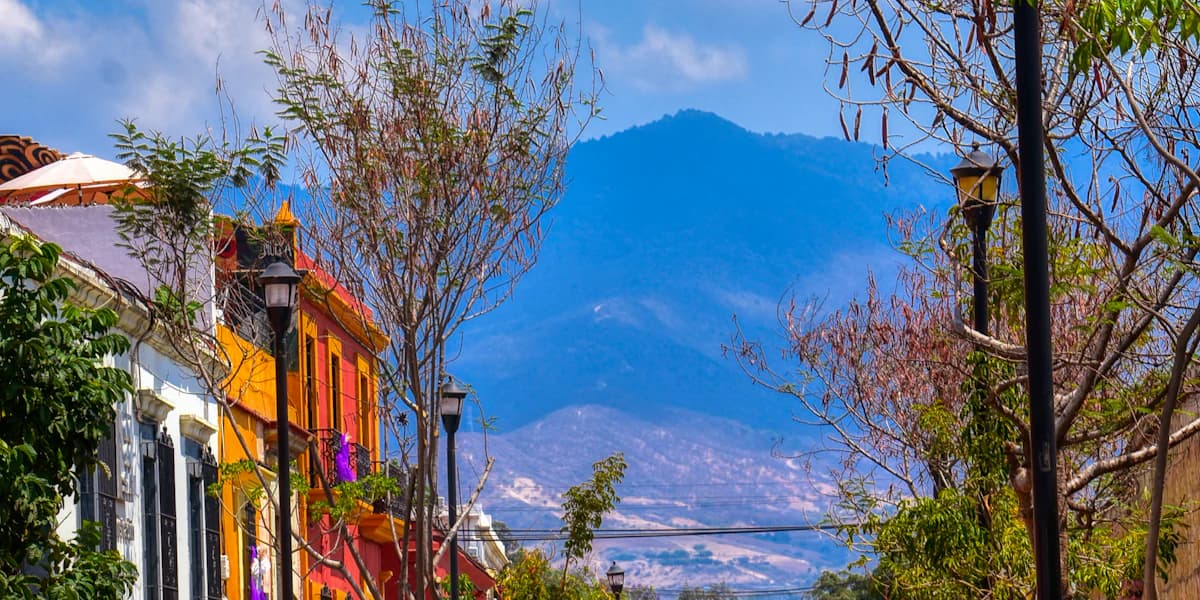
En la taquería
Oaxaca
12 words you’ll hear in Mexico
Some are everyday Mexican words, some are friendly slang. All of them come up fast once you start talking.
Carro
Car (coche in Spain)
Camión
Bus
Ahorita
Right now, or in a while
Un cafecito
A coffee, said warmly
Un momentito
Just a moment
Tlapalería
Hardware store
¿Qué onda?
What’s up?
Chido
Cool
La neta
Honestly, the truth
¡Ya llovió!
Long time no see
Ahí nos vemos
See you
¡Cuídate!
Take care
Mexican Spanish vs. Spanish from Spain
The grammar and most of the words are the same. The differences you’ll notice first are a sound, a pronoun, a tense and a few everyday words.
| Topic | In Mexico | In Spain |
|---|---|---|
| c and z before e and i | In MexicoSaid like an s, so casa and caza sound the same | In SpainOften said like the th in think |
| “You” to a group | In MexicoUstedes, for friends and strangers alike | In SpainVosotros with friends, ustedes to be polite |
| Something you just did | In MexicoYa comí | In SpainYa he comido |
| Car | In MexicoCarro | In SpainCoche |
Speakers from both countries understand each other without trouble, much like American and British English.
Heading to Mexico soon? Start with our Spanish phrases for your trip to Mexico.How Mexican Spanish sounds
Four things your ear will notice first.
casa · caza
c and z sound like s
Before e and i, c sounds like s, and so does z. These two words, house and hunt, sound exactly the same.
gallina · silla
ll and y are one sound
Mexican Spanish says ll and y the same way, close to the y in yes. There is no separate ll sound to learn.
¿Qué vas a hacer?
The s stays clear
In central Mexico, the s at the end of a syllable is kept, which makes words easier to pick apart. On the coasts it’s often softened, closer to ¿Qué va’jacer?
México · Xochimilco · Xola
x has more than one sound
Many place names come from Nahuatl and Mayan languages. The x can sound like a Spanish j, like an s or like sh, depending on the word.
Accents also change across Mexico. Yucatán sounds quite different from Mexico City, the north has its own intonation, and the coasts share traits with Caribbean Spanish.
Grammar you’ll notice
The rules are the same as anywhere else. Mexico just has a few favorite choices.
Ustedes for every group
Vosotros isn’t used in everyday speech. Mexicans say ustedes to any group, which means one fewer verb form to learn.
¿Ustedes quieren algo de tomar?
Usted with people you don’t know
Mexicans use usted in most social situations. With a driver, a server or someone older, usted is the safe choice.
¿Me puede ayudar, por favor?
The simple past for things you just did
Where Spain often says he comido, Mexico usually says comí. You’ll hear the simple past for things that happened a minute ago.
Ya comí, gracias.
Little words with a lot of warmth
Endings like -ito and -ita show up everywhere, and they’re about feeling, not size. Una casita grande is a nice, big house. Ahorita can mean right now or later, so listen to the context.
Ahorita vengo.
Corrections in the conversation
How Poco a poco points out the Mexican choice
In Mexico
¿Ustedes tienen mesa para dos?
Mexicans use ustedes for every group.
Sounds more natural
Ya comí, gracias.
In Mexico, the simple past is more common for things you just did.
Why learn Mexican Spanish?
Mexico has more Spanish speakers than any other country, more than double the next one. If you’ll spend time in Mexico, or talk with Mexican friends, family or coworkers, it’s the Spanish you’ll hear most, and it’s understood everywhere else too.
9 in 10
native Spanish speakers live in the Americas. Latin American Spanish is what you'll hear most, in the US too.
1 in 4
native Spanish speakers is Mexican, more than any other country. That's why our scenes are set there.
Everywhere
Understood from Bogotá to Barcelona, just as American English is in London.
How to learn Mexican Spanish
Start with the shared core.
Grammar and most words are the same in every Spanish-speaking country, so the basics carry over wherever you go.
Learn the Mexican choices.
Use ustedes for groups, say ya comí rather than ya he comido, and pick up words like carro, camión and ahorita.
Listen to Mexican speakers.
Your ear gets used to the rhythm, the clear s of central Mexico and the way people actually talk.
Talk in Mexican settings.
Practice the conversations you’d really have there: ordering at a taquería, catching a camión, chatting with a neighbor.
Practice Mexican Spanish out loud.
Every Poco a poco scene is set in Mexico: a bus stop in Mérida, a taxi in Mexico City, a taquería in Oaxaca. You answer out loud, ask for a hint when you’re stuck and get gentle corrections right in the conversation.
Questions about Mexican Spanish
Is Mexican Spanish different from Spanish in Spain?
A little, mostly in sound and in a handful of words and forms. In Mexico, c and z sound like s, ustedes is used for every group instead of vosotros, and some everyday words differ, like carro where Spain says coche. The grammar and most of the vocabulary are the same.
Can people from Mexico and Spain understand each other?
Yes. Speakers from the two countries usually understand each other without trouble, much like American and British English speakers do.
Do Mexicans use vosotros?
Not in everyday speech. Mexicans use ustedes for any group. Most know vosotros from older texts and the national anthem, so they’ll understand you if you use it.
What does ahorita mean in Mexico?
It comes from ahora (now), but it can mean right now or later, depending on the moment. Sí, ahorita te la paso usually means right away. Ahorita nos vemos usually means see you later.
Is Mexican Spanish a good choice to learn?
Mexico has more Spanish speakers than any other country, and Mexican Spanish is understood wherever Spanish is spoken. If you plan to spend time in Mexico or talk with Mexican friends, family or coworkers, it’s the Spanish you’ll hear most.
How can I learn Mexican Spanish?
Learn the shared basics, then the Mexican choices like ustedes, the simple past and words like carro and camión. Listen to Mexican speakers, and practice real conversations set in Mexico. Poco a poco’s scenes are set in Mexico, with hints when you’re stuck and gentle corrections in the conversation.
Start speaking Mexican Spanish.
Poco a poco opens November 16. Join the waitlist and we’ll email you when your first scene is ready.